
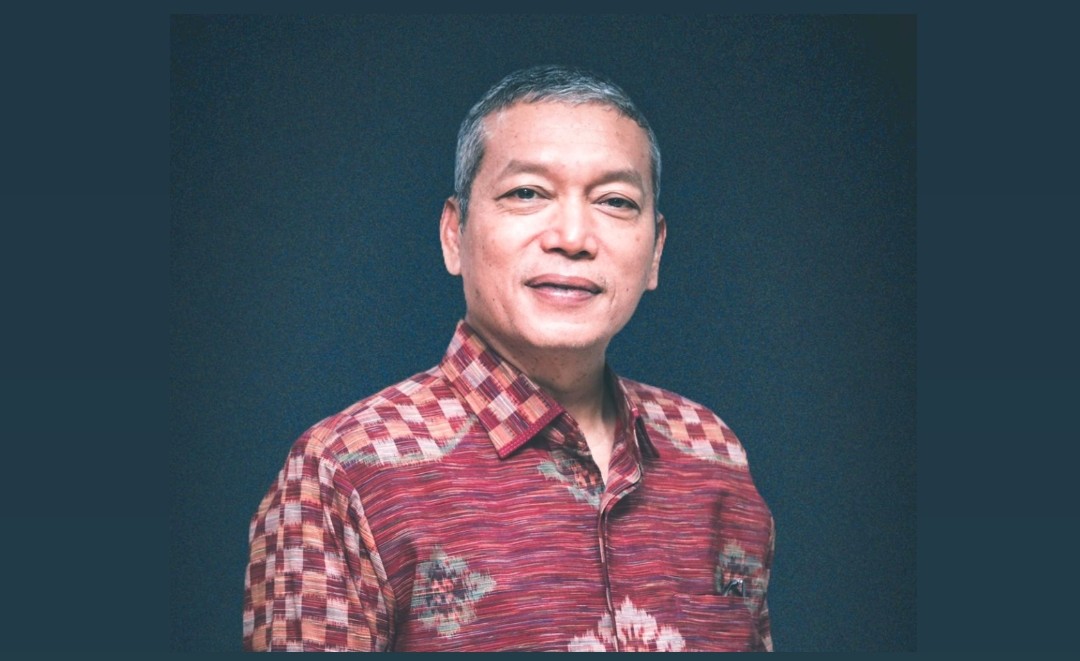
By Eko B. Supriyanto, Editor-in-Chief of Infobank Media Group
INDONESIA has fallen into a stagnant growth trap. The Indonesian economy has long been stuck in a growth range of 5 percent. This figure is sufficient for stability, but far from enough to make the leap to becoming a high-income country. Five percent growth is still insufficient to support the workforce. Young people find it difficult to find work, while taxes are massively targeting the middle class.
Worse still, economic growth has been unable to prevent the gap between the increase in workers’ incomes and the increase in costs. Housing, transportation, education, and living costs are burning up, making life increasingly difficult. This situation has given rise to a generation burdened with payday loans and unsecured consumer credit.
In fact, over the past 10 years, we have witnessed how this moderate growth has been unable to lift Indonesia out of the middle-income trap. History shows that only countries that have been able to grow at a consistent rate of over 7 percent—such as Japan and South Korea—have succeeded in moving up the ladder.
This is where the idea of Purbaya Yudhi Sadewa, Indonesia’s Minister of Finance, regarding the need for a massive injection of liquidity into the banking system is worth serious consideration. It seems that Purbaya was inspired by the theory of Milton Friedman, a renowned economist whose theory was able to revive the US economy during the Great Depression.
According to Infobank Institute records, Milton Friedman, in A Monetary History of the United States, asserted that the Great Depression was triggered by a liquidity drought. In the context of Indonesia today, we see similar symptoms: sluggish primary money (MO) growth of only 0.34 percent (yoy) as of August 2025. Compare this with the SBY era, which averaged 17.39 percent, driving credit growth above 21 percent.
From this, Purbaya concluded that “pumping” liquidity into the banking system—especially through state-owned banks with extensive reach—would drive down credit interest rates and ultimately spur investment and consumption credit.
Purbaya took a bold step: transferring government funds deposited at BI, amounting to more than IDR 450 trillion, to Himbara banks, with an initial injection of IDR 200 trillion. This was not merely a monetary policy, but a rescue strategy. At the very least, the liquidity problem in banks had been resolved.
The results were not disappointing. There were positive aspects, especially for Himbara banks in terms of liquidity. Loans began to flow smoothly. In fact, loan disbursements from Himbara banks exceeded Rp30 trillion. So, the figure of Rp200 trillion was actually quite small.
Initially, Purbaya’s policy of flooding the market with liquidity was met with criticism from the banking sector, due to low credit demand. It was mentioned that the amount of undisbursed loans was still high, at Rp2,372 trillion. That was the reason given by bankers. However, it turns out that bankers feel helped by this overflow of liquidity. The issue of liquidity, which has been a problem for the past two years, being scarce and expensive, has at least begun to be resolved.
In fact, currently (October 2025) there has been a decline in commercial bank deposits in BI accounts. This means that banks have also begun to be “eager” to “pee credit” into the business sector. The corporate sector remains the driving force behind bank lending. Thus, BI’s low interest rate policy, along with the injection of liquidity into Himbara banks, serves as a “boost” for the real sector.
Purbayanomics: Pro-Growth
Purbaya is a financial market practitioner and senior economic analyst. His background in the securities industry and as an analyst at Danareksa Sekuritas Indonesia shapes his perspective. His approach is heterodox, combining market principles with strategic government intervention to achieve national goals.
He is close to Prabowo’s economic vision, which emphasizes natural resource-based development and industrialization. In fact, Purbaya was an advisor to two presidents during the SBY and Jokowi eras.
It is possible that Purbaya’s school of thought, or Purbayanomics, is most notable not only for its focus on liquidity but also on a more expansive and pro-growth fiscal policy. Unlike Sri Mulyani’s cautious approach, Purbaya is expected to be more aggressive in using the state budget to drive high economic growth, in line with President Prabowo’s vision for accelerated development.
Purbaya may be more tolerant of increased budget deficits and debt in the short term, as long as they are used for investments that are considered strategic (such as food estates, industrial downstreaming, and energy infrastructure).
Purbaya understands market dynamics. His policies will be highly reactive to market sentiment and global conditions. He will be adept at managing investor perceptions. With his pragmatism, he is not rigidly tied to any one school of thought.
This is where the idea of Purbaya Yudhi Sadewa, Indonesia’s Minister of Finance, regarding the need for a massive injection of liquidity into the banking system is worth serious consideration. It seems that Purbaya was inspired by the theories of Milton Friedman, the renowned economist whose theories helped revive the US economy during the Great Depression.
According to Infobank Institute records, Milton Friedman, in A Monetary History of the United States, asserted that the Great Depression was triggered by a liquidity drought. In the context of Indonesia today, we see similar symptoms: sluggish primary money (MO) growth of only 0.34 percent (yoy) as of August 2025. Compare this with the SBY era, which averaged 17.39 percent, driving credit growth above 21 percent.
From this, Purbaya concluded that “pumping” liquidity into the banking system—especially through state-owned banks with extensive reach—would drive down credit interest rates and ultimately spur investment and consumption credit.
Purbaya took a bold step: transferring government funds deposited at BI, amounting to more than IDR 450 trillion, to Himbara banks, with an initial injection of IDR 200 trillion. This was not merely a monetary policy, but a rescue strategy. At the very least, the liquidity problem in banks had been resolved.
The results were not disappointing. There were positive aspects, especially for Himbara banks in terms of liquidity. Loans began to flow smoothly. In fact, loan disbursements from Himbara banks exceeded Rp30 trillion. So, the figure of Rp200 trillion was actually quite small.
Initially, Purbaya’s policy of flooding the market with liquidity was met with criticism from the banking sector, due to low credit demand. It was mentioned that the amount of undisbursed loans was still high, at Rp2,372 trillion. That was the reason given by bankers. However, it turns out that bankers feel helped by this overflow of liquidity. The issue of liquidity, which has been a problem for the past two years, being scarce and expensive, has at least begun to be resolved.
In fact, currently (October 2025) there has been a decline in commercial bank deposits in BI accounts. This means that banks have also begun to be “eager” to “pee credit” into the business sector. The corporate sector remains the driving force behind bank lending. Thus, BI’s low interest rate policy, along with the injection of liquidity into Himbara banks, serves as a “boost” for the real sector.
Purbayanomics: Pro-Growth
Purbaya is a financial market practitioner and senior economic analyst. His background in the securities industry and as an analyst at Danareksa Sekuritas Indonesia shapes his perspective. His approach is heterodox, combining market principles with strategic government intervention to achieve national goals.
He is close to Prabowo’s economic vision, which emphasizes natural resource-based development and industrialization. In fact, Purbaya was an advisor to two presidents during the SBY and Jokowi eras.
It is possible that Purbaya’s school of thought, or Purbayanomics, is most notable not only for its focus on liquidity but also on a more expansive and pro-growth fiscal policy. Unlike Sri Mulyani’s cautious approach, Purbaya is expected to be more aggressive in using the state budget to drive high economic growth, in line with President Prabowo’s vision for accelerated development.
Purbaya may be more tolerant of increased budget deficits and debt in the short term, as long as they are used for investments that are considered strategic (such as food estates, industrial downstreaming, and energy infrastructure).
Purbaya is someone who understands market dynamics. His policies will be very reactive to market sentiment and global conditions. He will be adept at managing investor perceptions. With his pragmatism, he is not rigidly bound to any one school of thought.
Purbaya may implement policies that appear to be “pro-market” (such as investment facilities), but on the other hand also “interventionist” (such as subsidies for certain industries) if deemed necessary to achieve growth targets.
In short, Purbaya’s style is that of a pragmatic “growth strategist,” oriented toward medium-term results and willing to use fiscal instruments more aggressively to drive industrialization and growth.
The most notable difference in principle between Sri Mulyani and Purbaya is that Sri Mulyani adheres more to the philosophy of fiscal discipline and prudence. The budget must be healthy and sustainable.
Meanwhile, Purbaya is expansive and pro-growth. The budget is a tool to drive growth, and temporary deficits can be tolerated. For Sri Mulyani, macroeconomic stability and institutional reform (taxation, governance) are top priorities. Meanwhile, Purbaya places greater emphasis on accelerating economic growth and national strategic programs.
In short, the most striking difference between the two lies in their budget management philosophies. Sri Mulyani is a strict “goalkeeper” when it comes to fiscal sustainability, while Purbaya Yudi Sadewa (in his hypothetical scenario) would be a “striker” who uses the budget as the main tool to score economic growth goals, even if it means taking greater fiscal risks.
Sri Mulyani builds a solid foundation, while Purbaya is expected to focus more on building a tower of achievements on top of that foundation, with all the risks involved.
Ultimately, Purbaya Yudhi Sadewa’s ideas deserve appreciation for daring to push the discourse out of its comfort zone. However, we must learn from history that building a resilient economy cannot be achieved through shortcuts. “Flooding” the banking system with liquidity is a dangerous illusion, a dream that high growth can simply be printed in the central bank’s meeting room.
This is because the Indonesian economy needs comprehensive structural therapy, not just a monetary adrenaline shot. Our shared task—the government, monetary authorities, banking players, and the business world—is to build a solid economic foundation based on productivity, innovation, and equity.
Only then will the transformation towards quality and sustainable 8 percent growth (2029) be not just a dream, but a destiny that we can achieve. And Purbaya has already started this by flooding the market with liquidity, which will turn into credit, stimulate the business world, create jobs, increase purchasing power, and ultimately generate tax revenue for the state.
Hopefully, Purbaya’s policy of flooding the market with liquidity will be a magical solution amid the trap of 5 percent growth. Hopefully, it can move to 6.5 percent, then 8 percent. However, Purbaya needs friends. He cannot be left to walk alone. Real sector policies that have been dormant need to be implemented. The private sector that will be boosted also needs a market-friendly environment and government policies.
“Pharaoh, Lu!” said Minister Purbaya, commenting on cigarette excise rates that are considered too high. That is what the public likes. Hopefully, Minister Purbaya’s sarcastic remark will encourage the cigarette industry to revive so that it can massively recruit workers.
In an effort to clean up the sector, Purbaya even fired 26 tax officials who were “extortionists.” The public is also waiting to see how Purbaya will crack down on illegal excise players and the shadow economy behind the illegal export of minerals and commodities, which is rife with corruption. Purbaya’s move to urge the Ministry to immediately increase spending is a step that deserves appreciation. Spend and spend.
Reading the Direction of Purbayanomics Amidst the 5 Percent Growth Trap
By Eko B. Supriyanto, Editor-in-Chief of Infobank Media Group
INDONESIA has fallen into a stagnant growth trap. The Indonesian economy has long been stuck in a growth range of 5 percent. This figure is sufficient for stability, but far from enough to make the leap to becoming a high-income country. Five percent growth is still insufficient to support the workforce. Young people find it difficult to find work, while taxes are massively targeting the middle class.
Worse still, economic growth has been unable to prevent the gap between the increase in workers’ incomes and the increase in costs. Housing, transportation, education, and living costs are burning up, making life increasingly difficult. This situation has given rise to a generation burdened with payday loans and unsecured consumer credit.
In fact, over the past 10 years, we have witnessed how this moderate growth has been unable to lift Indonesia out of the middle-income trap. History shows that only countries that have been able to grow at a consistent rate of over 7 percent—such as Japan and South Korea—have succeeded in moving up the ladder.
This is where the idea of Purbaya Yudhi Sadewa, Indonesia’s Minister of Finance, regarding the need for a massive injection of liquidity into the banking system is worth serious consideration. It seems that Purbaya was inspired by the theory of Milton Friedman, a renowned economist whose theory was able to revive the US economy during the Great Depression.
According to Infobank Institute records, Milton Friedman, in A Monetary History of the United States, asserted that the Great Depression was triggered by a liquidity drought. In the context of Indonesia today, we see similar symptoms: sluggish primary money (MO) growth of only 0.34 percent (yoy) as of August 2025. Compare this with the SBY era, which averaged 17.39 percent, driving credit growth above 21 percent.
From this, Purbaya concluded that “pumping” liquidity into the banking system—especially through state-owned banks with extensive reach—would drive down credit interest rates and ultimately spur investment and consumption credit.
Purbaya took a bold step: transferring government funds deposited at BI, amounting to more than IDR 450 trillion, to Himbara banks, with an initial injection of IDR 200 trillion. This was not merely a monetary policy, but a rescue strategy. At the very least, the liquidity problem in banks had been resolved.
The results were not disappointing. There were positive aspects, especially for Himbara banks in terms of liquidity. Loans began to flow smoothly. In fact, loan disbursements from Himbara banks exceeded Rp30 trillion. So, the figure of Rp200 trillion was actually quite small.
Initially, Purbaya’s policy of flooding the market with liquidity was met with criticism from the banking sector, due to low credit demand. It was mentioned that the amount of undisbursed loans was still high, at Rp2,372 trillion. That was the reason given by bankers. However, it turns out that bankers feel helped by this overflow of liquidity. The issue of liquidity, which has been a problem for the past two years, being scarce and expensive, has at least begun to be resolved.
In fact, currently (October 2025) there has been a decline in commercial bank deposits in BI accounts. This means that banks have also begun to be “eager” to “pee credit” into the business sector. The corporate sector remains the driving force behind bank lending. Thus, BI’s low interest rate policy, along with the injection of liquidity into Himbara banks, serves as a “boost” for the real sector.
Purbayanomics: Pro-Growth
Purbaya is a financial market practitioner and senior economic analyst. His background in the securities industry and as an analyst at Danareksa Sekuritas Indonesia shapes his perspective. His approach is heterodox, combining market principles with strategic government intervention to achieve national goals.
He is close to Prabowo’s economic vision, which emphasizes natural resource-based development and industrialization. In fact, Purbaya was an advisor to two presidents during the SBY and Jokowi eras.
It is possible that Purbaya’s school of thought, or Purbayanomics, is most notable not only for its focus on liquidity but also on a more expansive and pro-growth fiscal policy. Unlike Sri Mulyani’s cautious approach, Purbaya is expected to be more aggressive in using the state budget to drive high economic growth, in line with President Prabowo’s vision for accelerated development.
Purbaya may be more tolerant of increased budget deficits and debt in the short term, as long as they are used for investments that are considered strategic (such as food estates, industrial downstreaming, and energy infrastructure).
Purbaya understands market dynamics. His policies will be highly reactive to market sentiment and global conditions. He will be adept at managing investor perceptions. With his pragmatism, he is not rigidly tied to any one school of thought.
This is where the idea of Purbaya Yudhi Sadewa, Indonesia’s Minister of Finance, regarding the need for a massive injection of liquidity into the banking system is worth serious consideration. It seems that Purbaya was inspired by the theories of Milton Friedman, the renowned economist whose theories helped revive the US economy during the Great Depression.
According to Infobank Institute records, Milton Friedman, in A Monetary History of the United States, asserted that the Great Depression was triggered by a liquidity drought. In the context of Indonesia today, we see similar symptoms: sluggish primary money (MO) growth of only 0.34 percent (yoy) as of August 2025. Compare this with the SBY era, which averaged 17.39 percent, driving credit growth above 21 percent.
From this, Purbaya concluded that “pumping” liquidity into the banking system—especially through state-owned banks with extensive reach—would drive down credit interest rates and ultimately spur investment and consumption credit.
Purbaya took a bold step: transferring government funds deposited at BI, amounting to more than IDR 450 trillion, to Himbara banks, with an initial injection of IDR 200 trillion. This was not merely a monetary policy, but a rescue strategy. At the very least, the liquidity problem in banks had been resolved.
The results were not disappointing. There were positive aspects, especially for Himbara banks in terms of liquidity. Loans began to flow smoothly. In fact, loan disbursements from Himbara banks exceeded Rp30 trillion. So, the figure of Rp200 trillion was actually quite small.
Initially, Purbaya’s policy of flooding the market with liquidity was met with criticism from the banking sector, due to low credit demand. It was mentioned that the amount of undisbursed loans was still high, at Rp2,372 trillion. That was the reason given by bankers. However, it turns out that bankers feel helped by this overflow of liquidity. The issue of liquidity, which has been a problem for the past two years, being scarce and expensive, has at least begun to be resolved.
In fact, currently (October 2025) there has been a decline in commercial bank deposits in BI accounts. This means that banks have also begun to be “eager” to “pee credit” into the business sector. The corporate sector remains the driving force behind bank lending. Thus, BI’s low interest rate policy, along with the injection of liquidity into Himbara banks, serves as a “boost” for the real sector.
Purbayanomics: Pro-Growth
Purbaya is a financial market practitioner and senior economic analyst. His background in the securities industry and as an analyst at Danareksa Sekuritas Indonesia shapes his perspective. His approach is heterodox, combining market principles with strategic government intervention to achieve national goals.
He is close to Prabowo’s economic vision, which emphasizes natural resource-based development and industrialization. In fact, Purbaya was an advisor to two presidents during the SBY and Jokowi eras.
It is possible that Purbaya’s school of thought, or Purbayanomics, is most notable not only for its focus on liquidity but also on a more expansive and pro-growth fiscal policy. Unlike Sri Mulyani’s cautious approach, Purbaya is expected to be more aggressive in using the state budget to drive high economic growth, in line with President Prabowo’s vision for accelerated development.
Purbaya may be more tolerant of increased budget deficits and debt in the short term, as long as they are used for investments that are considered strategic (such as food estates, industrial downstreaming, and energy infrastructure).
Purbaya is someone who understands market dynamics. His policies will be very reactive to market sentiment and global conditions. He will be adept at managing investor perceptions. With his pragmatism, he is not rigidly bound to any one school of thought.
Purbaya may implement policies that appear to be “pro-market” (such as investment facilities), but on the other hand also “interventionist” (such as subsidies for certain industries) if deemed necessary to achieve growth targets.
In short, Purbaya’s style is that of a pragmatic “growth strategist,” oriented toward medium-term results and willing to use fiscal instruments more aggressively to drive industrialization and growth.
The most notable difference in principle between Sri Mulyani and Purbaya is that Sri Mulyani adheres more to the philosophy of fiscal discipline and prudence. The budget must be healthy and sustainable.
Meanwhile, Purbaya is expansive and pro-growth. The budget is a tool to drive growth, and temporary deficits can be tolerated. For Sri Mulyani, macroeconomic stability and institutional reform (taxation, governance) are top priorities. Meanwhile, Purbaya places greater emphasis on accelerating economic growth and national strategic programs.
In short, the most striking difference between the two lies in their budget management philosophies. Sri Mulyani is a strict “goalkeeper” when it comes to fiscal sustainability, while Purbaya Yudi Sadewa (in his hypothetical scenario) would be a “striker” who uses the budget as the main tool to score economic growth goals, even if it means taking greater fiscal risks.
Sri Mulyani builds a solid foundation, while Purbaya is expected to focus more on building a tower of achievements on top of that foundation, with all the risks involved.
Ultimately, Purbaya Yudhi Sadewa’s ideas deserve appreciation for daring to push the discourse out of its comfort zone. However, we must learn from history that building a resilient economy cannot be achieved through shortcuts. “Flooding” the banking system with liquidity is a dangerous illusion, a dream that high growth can simply be printed in the central bank’s meeting room.
This is because the Indonesian economy needs comprehensive structural therapy, not just a monetary adrenaline shot. Our shared task—the government, monetary authorities, banking players, and the business world—is to build a solid economic foundation based on productivity, innovation, and equity.
Only then will the transformation towards quality and sustainable 8 percent growth (2029) be not just a dream, but a destiny that we can achieve. And Purbaya has already started this by flooding the market with liquidity, which will turn into credit, stimulate the business world, create jobs, increase purchasing power, and ultimately generate tax revenue for the state.
Hopefully, Purbaya’s policy of flooding the market with liquidity will be a magical solution amid the trap of 5 percent growth. Hopefully, it can move to 6.5 percent, then 8 percent. However, Purbaya needs friends. He cannot be left to walk alone. Real sector policies that have been dormant need to be implemented. The private sector that will be boosted also needs a market-friendly environment and government policies.
“Pharaoh, Lu!” said Minister Purbaya, commenting on cigarette excise rates that are considered too high. That is what the public likes. Hopefully, Minister Purbaya’s sarcastic remark will encourage the cigarette industry to revive so that it can massively recruit workers.
In an effort to clean up the sector, Purbaya even fired 26 tax officials who were “extortionists.” The public is also waiting to see how Purbaya will crack down on illegal excise players and the shadow economy behind the illegal export of minerals and commodities, which is rife with corruption. Purbaya’s move to urge the Ministry to immediately increase spending is a step that deserves appreciation. Spend and spend.