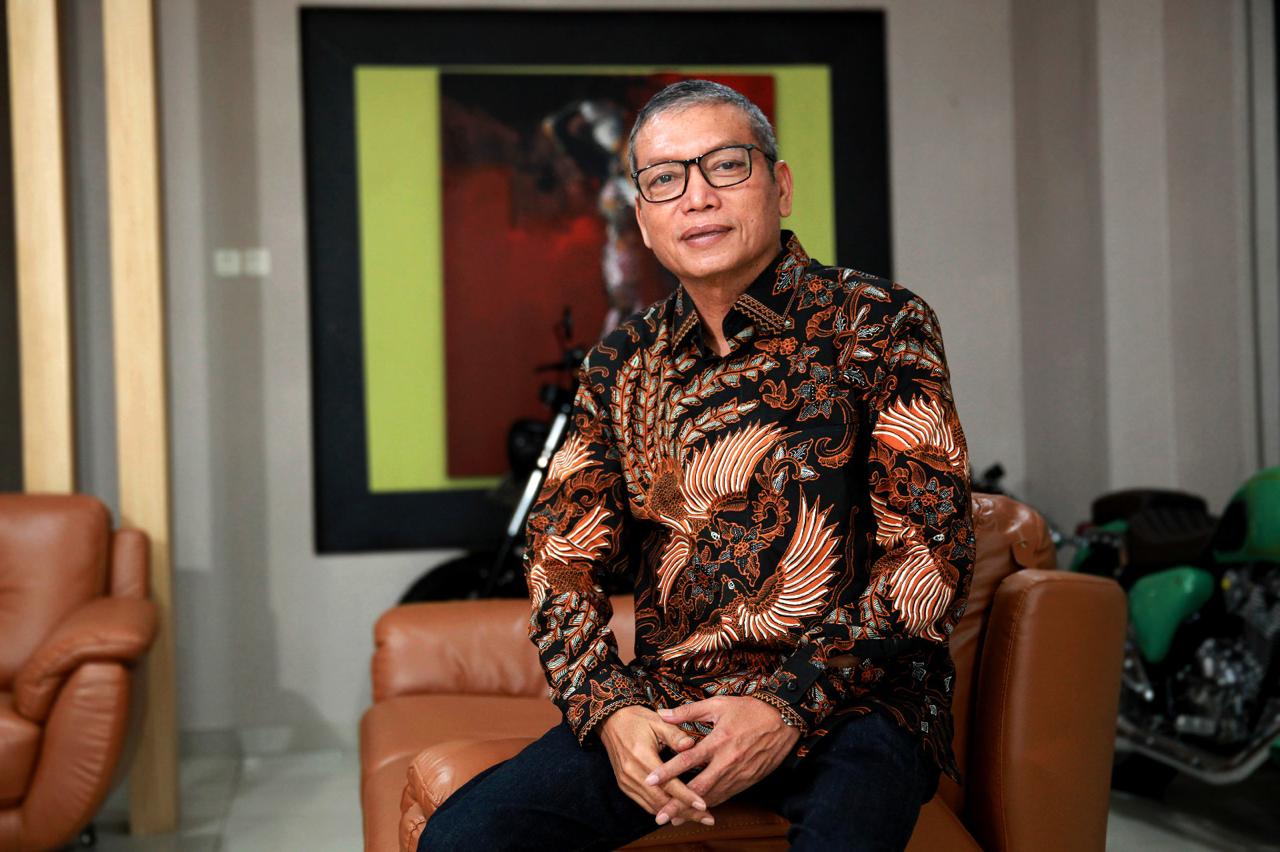
By Eko B. Supriyanto, Editor-in-Chief of InfoBank Media Group
Politics is heating up. A number of regions have been hit by demonstrations. The looting of luxury homes belonging to public figures, such as Ahmad Sahroni and Eko Patrio, as well as symbols of economic power, such as Sri Mulyani, is not simply a display of public anger.
President Prabowo Subianto summoned the leaders of the ruling parties and the PDI-P, which is outside the government. Previously, the president also summoned religious leaders. These are serious events requiring the summons of important figures. President Prabowo hinted at treason in his statement, and of course, the facilities provided to members of the House of Representatives were criticized.
However, these looting incidents are truly critical and serious. Now, if we use the tools of political economy analysis, we must distinguish between an outburst of social frustration and cunning political manipulation. Therefore, claiming that this is purely the result of “public anger” is a dangerous oversimplification. It’s like treating cancer with a Band-Aid.
While the symptoms may be visible—hunger, inequality, and the burden of life—the malignant tumor is the vicious power games of politicians hungry for legitimacy.
According to several studies and political economy theory, mass anger is a political commodity that can be bought and sold. Difficult economic conditions—with inflation eroding purchasing power, rising unemployment, and growing inequality—create a situation that is easily set ablaze.
However, fuel does not explode on its own. Someone must deliberately light a match and throw it into the pile of gasoline. Political elites fighting to seize or maintain power understand this very well. Rather than creating solutions, they exploit problems. Hungry and frustrated people are not seen as people in need, but as instruments of chaos and tools of disorder.
These people are collateral damage that can be sacrificed for a single purpose: seizing the throne. Organized looting targeting specific, symbolic locations is a strong indication of political engineering. This is not a spontaneous mob rampaging because of hunger.
Rather, it could be a force directed at damaging the government’s image, portraying the country as a failed state, and ultimately weakening the legitimacy of the ruling power. Sri Mulyani was not chosen by chance. She is a symbol of the government’s fiscal and economic policies. Attacking her attacks the heart of the country’s economic policy.
However, these provocateurs can only succeed if there is fertile ground prepared by collective failure. First, the government must not be complacent. Building the economic resilience of the poor is not just a program anymore, but a strategic necessity.
Targeted social assistance, food price controls, and inclusive employment are social buffers that prevent people from being easily manipulated by corrupt politicians. Well-fed people with a bright future are more immune to provocation.
Second, the lifestyle of the elite themselves is the most painful issue. It is ironic that while the people struggle to meet their basic needs, their representatives and state officials flaunt their extravagant lifestyles. Luxury cars, billion-dollar watches, and lavish parties during a crisis are an unforgivable political stupidity.
Every photo showing off wealth gives provocateurs free ammunition to say, “Look! They’re sucking your blood!” Paying taxes is akin to funding the lavish lifestyles of officials and members of the House of Representatives. This display of luxury is a betrayal of trust and justifies an act of provocation for those who want to incite unrest.
Finally, do not allow yourself to be provoked or baited. People must be vigilant and intelligent. Don’t allow yourselves to become pawns on their chessboard of power. Channel your anger into constructive energy to demand accountability, not destruction, which will only cause you suffering.
The government must work hard to restore the economy and ensure social justice. On the other hand, they must have the political courage to clean up their own house and ensure that every official lives with simplicity and integrity, not luxury and greed.
Ultimately, last week’s looting was a mirror. It revealed politicians who are willing to sacrifice their people and exposed the weaknesses of our nation. Let us learn from this. Instead of destroying each other, we should work to build a more equitable political economy where people are the sole priority.
Last week’s looting was a symptom, not the disease. The disease is the political greed of a few elites and our collective failure to build a fair economy. Addressing only the symptom with “legal punishment” while ignoring the root cause is another illusion that will one day explode in an even more violent way.
The looting and destruction of public facilities that occurred last week are anti-reform and undermine a healthy democracy.