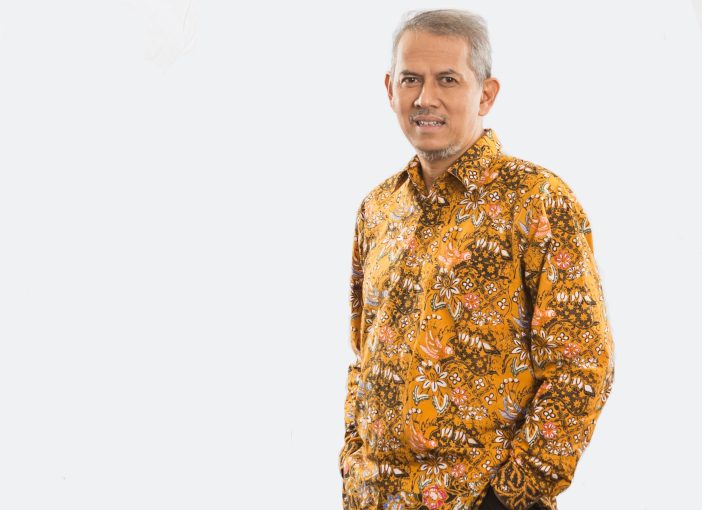
By Eko B. Supriyanto, Editor-in-Chief of Infobank Media Group
There is something odd about the government mentioning “incentives” at the very same moment it designates who must pay for them. It’s like inviting someone into the living room, offering them sweet tea, and then whispering, “Sir, the funds in your account are already visible.”
The House of Representatives has just passed the P2SK Bill. BPI Danantara now has the authority to issue Patriot Bonds and Merah Putih Bonds. Immediately, word spread: Indonesian citizens with savings exceeding Rp3 billion are required to purchase them.
Finance Minister Purbaya Yudhi Sadewa quickly clarified. “As far as I know, it’s not mandatory. But I don’t know if that’s changed.”
That statement wasn’t a clarification. It was a deliberate architecture of uncertainty. “It’s not mandatory—but I don’t know if that will change.” A soft threat that operates without needing the president’s signature.
Then he added: there will be incentives. “Attractive to people with money.”
This is where the veil of vested interests begins to lift.
In the lexicon of banking political economy, “incentives” amid excess liquidity are a euphemism. Our banks are awash with cheap funds. Savings exceeding Rp3 billion are idle deposits, paying meager interest, waiting to be channeled into loans. Suddenly, the state steps in offering “incentives” to shift those funds into Danantara bonds, which are not supervised by the Financial Services Authority (OJK).
What happens? Savings quietly turn into government debt. The intermediation risk originally borne by banks now shifts onto taxpayers’ shoulders. Banks lose cheap funds. The state gains capital. Money owners get “incentives.” Who pays the difference?
We do. Always us.
This is high-level asset stripping wrapped in patriotism. The state dares not touch the true wealth structure—productive assets, land, stocks, global bonds. It merely knocks on the door of bank accounts, where capital lies dormant, then wakes it up with the national anthem.
Capital laborers. Forced labor for the moneyed class, not at gunpoint, but through “incentives” that are never specified.
Purbaya emphasized that this issuance is professional, accountable, and risk-management-based. Of course. Every well-planned heist always has meticulous cash records. Even though we know that this “Money Miner” named Danantara doesn’t have any financial statements. It’s a black box! Yet, every company that issues bonds is supervised by the OJK.
And at the end of this corridor, what remains is the age-old question: must development always be funded by shifting the burden onto those who have no choice? Does financial sovereignty mean the state has the right to dip into its citizens’ wallets and call them “patriots”?
“As far as I know, it’s not mandatory,” said Purbaya.
Ah, but we all know: in this country, what isn’t mandatory today can become mandatory tomorrow morning. And when that happens, no one will remember who first whispered, “I didn’t know it would change.”
This country isn’t a “Command State.” Moreover, Indonesia has a history of “money clipping”—the confiscation of currency during the Old Order era. The story is heartbreaking, and it remains a trauma. Also, during the same era when hyperinflation struck in 1966, the state couldn’t pay the coupons and principal on government bonds. Moreover, this is just Danantara, which isn’t supervised by the OJK and hasn’t released financial statements yet. We don’t doubt Danantara, but good governance is a key requirement for issuing bonds.
Hopefully, the public’s savings exceeding Rp3 billion won’t be scared off and moved from domestic banks to foreign banks.
So the idea of tapping into dormant funds is a good one. But, scrap the “MANDATORY” requirement to buy Merah Putih Bonds. (*)
Romusha Modal, Waive the Obligation to Purchase Merah Putih Bonds
By Eko B. Supriyanto, Editor-in-Chief of Infobank Media Group
There is something odd about the government mentioning “incentives” at the very same moment it designates who must pay for them. It’s like inviting someone into the living room, offering them sweet tea, and then whispering, “Sir, the funds in your account are already visible.”
The House of Representatives has just passed the P2SK Bill. BPI Danantara now has the authority to issue Patriot Bonds and Merah Putih Bonds. Immediately, word spread: Indonesian citizens with savings exceeding Rp3 billion are required to purchase them.
Finance Minister Purbaya Yudhi Sadewa quickly clarified. “As far as I know, it’s not mandatory. But I don’t know if that’s changed.”
That statement wasn’t a clarification. It was a deliberate architecture of uncertainty. “It’s not mandatory—but I don’t know if that will change.” A soft threat that operates without needing the president’s signature.
Then he added: there will be incentives. “Attractive to people with money.”
This is where the veil of vested interests begins to lift.
In the lexicon of banking political economy, “incentives” amid excess liquidity are a euphemism. Our banks are awash with cheap funds. Savings exceeding Rp3 billion are idle deposits, paying meager interest, waiting to be channeled into loans. Suddenly, the state steps in offering “incentives” to shift those funds into Danantara bonds, which are not supervised by the Financial Services Authority (OJK).
What happens? Savings quietly turn into government debt. The intermediation risk originally borne by banks now shifts onto taxpayers’ shoulders. Banks lose cheap funds. The state gains capital. Money owners get “incentives.” Who pays the difference?
We do. Always us.
This is high-level asset stripping wrapped in patriotism. The state dares not touch the true wealth structure—productive assets, land, stocks, global bonds. It merely knocks on the door of bank accounts, where capital lies dormant, then wakes it up with the national anthem.
Capital laborers. Forced labor for the moneyed class, not at gunpoint, but through “incentives” that are never specified.
Purbaya emphasized that this issuance is professional, accountable, and risk-management-based. Of course. Every well-planned heist always has meticulous cash records. Even though we know that this “Money Miner” named Danantara doesn’t have any financial statements. It’s a black box! Yet, every company that issues bonds is supervised by the OJK.
And at the end of this corridor, what remains is the age-old question: must development always be funded by shifting the burden onto those who have no choice? Does financial sovereignty mean the state has the right to dip into its citizens’ wallets and call them “patriots”?
“As far as I know, it’s not mandatory,” said Purbaya.
Ah, but we all know: in this country, what isn’t mandatory today can become mandatory tomorrow morning. And when that happens, no one will remember who first whispered, “I didn’t know it would change.”
This country isn’t a “Command State.” Moreover, Indonesia has a history of “money clipping”—the confiscation of currency during the Old Order era. The story is heartbreaking, and it remains a trauma. Also, during the same era when hyperinflation struck in 1966, the state couldn’t pay the coupons and principal on government bonds. Moreover, this is just Danantara, which isn’t supervised by the OJK and hasn’t released financial statements yet. We don’t doubt Danantara, but good governance is a key requirement for issuing bonds.
Hopefully, the public’s savings exceeding Rp3 billion won’t be scared off and moved from domestic banks to foreign banks.
So the idea of tapping into dormant funds is a good one. But, scrap the “MANDATORY” requirement to buy Merah Putih Bonds. (*)