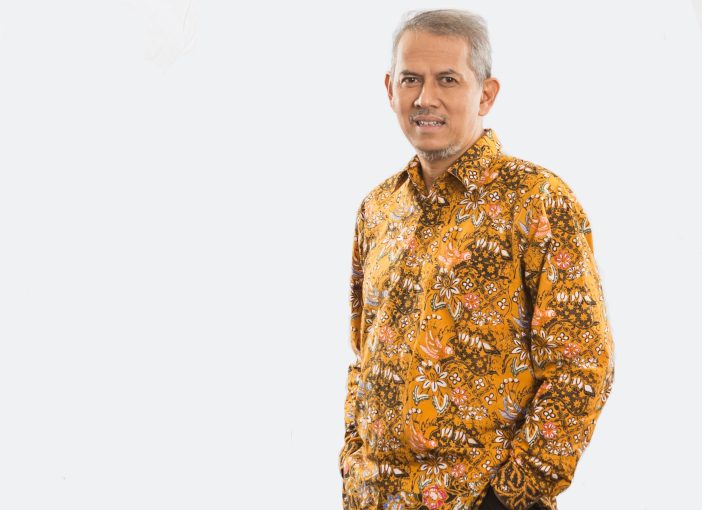
By Eko B. Supriyanto, Editor-in-Chief of Infobank Media Group
APPROVED! The decision made at yesterday’s (June 8) plenary session of the House of Representatives to ratify the revision of the Law on the Development and Strengthening of the Financial Sector (P2SK Law)—which includes a provision to write off non-performing loans for banks, non-bank financial institutions, and regionally-owned enterprises—marks a new chapter fraught with ambivalence.
On one hand, this policy could serve as a “way out” for millions of micro and small business owners who have been trapped in the burden of unpaid debt for decades. On the other hand, it reopens the Pandora’s box of moral hazard that has never truly been closed since the 1998 crisis. As usual, those with the most at stake are vying to claim they are the strongest advocates for the common people, while the underlying economic power structures remain unchanged.
Before delving deeper, let’s first examine the scope of the issue. According to data from the Financial Services Authority as of April 2026, the gross non-performing loan (NPL) ratio for the banking sector stood at 2.38 percent, a slight improvement compared to the end of last year. However, in the MSME segment, the NPL ratio reached 4.10 percent, with a total outstanding non-performing debt of Rp178.5 trillion.
Dari jumlah itu, sekitar Rp63,2 triliun merupakan kredit dengan plafon di bawah Rp500 juta yang tersebar di 15,2 juta rekening—mayoritas adalah pedagang pasar, petani kecil, tukang ojek, hingga warung rumahan. Belum lagi data dari perusahaan pembiayaan (multifinance) dan fintech peer-to-peer lending yang mencatat NPL di atas 5 persen serta akumulasi piutang macet puluhan triliun rupiah.
Meanwhile, Regional Development Banks (BPDs), which have long served as channels for disbursing government loans in the regions, also reported an average SME NPL rate of 6.1 percent, with some BPDs outside Java even exceeding double digits.
These figures confirm that SME non-performing loans are not merely a business anomaly, but a structural issue. They result from a combination of an unbalanced supply chain, limited market access, and most glaringly: our banking system, which prefers to disburse loans merely as a formality to meet ratios, without serious mentoring.
Thus, when the revision of the P2SK Law opened the door to debt write-offs for non-performing loans under Rp500 million for businesses and Rp300 million for individuals, a fundamental question arises: who is truly being saved? Small debtors, or rather the banks’ balance sheets, which can now clear their portfolios of provisioning burdens? Or, will this instead create moral hazard for both parties?
From a political economy perspective, this debt write-off policy cannot be separated from the power dynamics between capital owners, regulators, and the state. The banking sector, particularly state-owned and large private banks, has long been the party most benefited by various state-subsidized loan restructuring and write-off schemes. Debt write-offs—which differ from write-downs because they permanently eliminate the bank’s right to collect—carry significant fiscal and legal consequences.
For loans guaranteed by the government through the KUR program or Jamkrindo/Askrindo guarantees, the burden of repayment will fall on the state budget. For non-program loans, banks must absorb the losses themselves, which will reduce their profits and equity. However, don’t be surprised if some banks actually welcome this: clearing small non-performing loans where collection costs exceed the value of the receivables is a sensible business move. Especially if those losses can be offset by tax incentives or other benefits secured through lobbying in Senayan.
At the regional state-owned enterprise (BUMD) level, the situation is even more precarious. Many regional banks have non-performing loans resulting from “projects commissioned” by local elites. Debt forgiveness can serve as a tool to cover up tracks without a clear legal process. Don’t be surprised if, in the future, we see large debtors suddenly breaking down their credit limits into amounts below Rp500 million to qualify for debt forgiveness—a practice commonly referred to as “moral hazard by design.” The political economy of debt forgiveness is the political economy of absolution without repentance.
What about the social aspect? On the ground, at the traditional markets I’ve visited, small merchants are greeting this debt forgiveness with a mix of hope and anxiety. Those who’ve been unable to access formal financial services for years due to a blacklisted BI Checking or now SLIK-OJK record are now envisioning a fresh start. This is where the policy’s strength and weakness lie.
Socially, debt forgiveness acts as a pressure valve for household economic stress. It restores the dignity of the little people who have long lived in fear of debt collectors and demand letters. However, if it is not accompanied by improvements to the business ecosystem, mentoring programs, and concrete market access, they will simply find themselves entangled in new debt within a few years. Debt forgiveness without empowerment is merely a second round of the debt cycle. This is the latent danger.
The post-pandemic development of MSME lending has shown stagnant growth in the range of 6–8 percent per year, with its contribution to total bank lending remaining below 22 percent. Bankers consistently argue that MSMEs are high-risk and costly to acquire. In reality, the problem lies in the inability of conventional banks to design products and business models suited to the nature of MSMEs.
Instead of experimenting with relationship banking approaches or simple technologies, they prefer to channel credit to fintech firms with high interest rates, which ultimately burden borrowers. Thus, this debt forgiveness policy can be interpreted as a belated acknowledgment that our financial system has failed to serve SMEs without pushing them into debt.
What warrants caution is the potential ripple effect on the non-bank sector. Multifinance companies with stalled motorcycle and production equipment loans, or fintech lending platforms with piling small receivables, will use this new legal framework to clean up their balance sheets. Without strict oversight, debt write-offs could become a scheme for inflating fictitious losses, harming retail investors and the capital market. The OJK must ensure that every rupiah of debt written off undergoes a forensic audit and transparent mechanisms, rather than relying solely on self-assessment reports from financial institutions.
From a different perspective—one that is always suspicious of the alliance between capital and power—this policy is, in fact, a reflection of the contradictions of Indonesian capitalism: the state steps in to save the market, yet often turns a blind eye to the structures that breed inequality. Forgiving the debts of the poor is noble. But it is even nobler to create a financial system that does not turn them into perpetual debtors.
Thus, the revision of the P2SK Law can only become a historic milestone if accompanied by fundamental reforms and if the government creates opportunities by fostering quality economic growth. Let us ensure that the debt forgiveness policy is not merely a political promise to be cashed in during the next election. And so on.
The House of Representatives and the government should be reminded that standing with the common people is not measured by how many trillions of debt are written off, but by how many common people no longer need to go into debt just to survive. Without that, debt forgiveness is merely a political ritual whose costs are once again borne by the people—this time through taxes and inflation. It is time to stop celebrating numbers on paper and start working in the market alleys.
If we’re not careful, this debt forgiveness will create moral hazard everywhere. Even more concerning is that many people are now borrowing money just to put food on the table, which could lead to a higher risk of defaults. Then the debt is written off, they borrow again, and the process repeats. Moral hazard will arise among borrowers who feign default.
But the real issue is public purchasing power. If that is the case, this P2SK Law is more for populist purposes. Moral hazard will accompany this policy and ultimately still harm banks, including rural banks (BPRs), multifinance companies, and fintech lenders.