
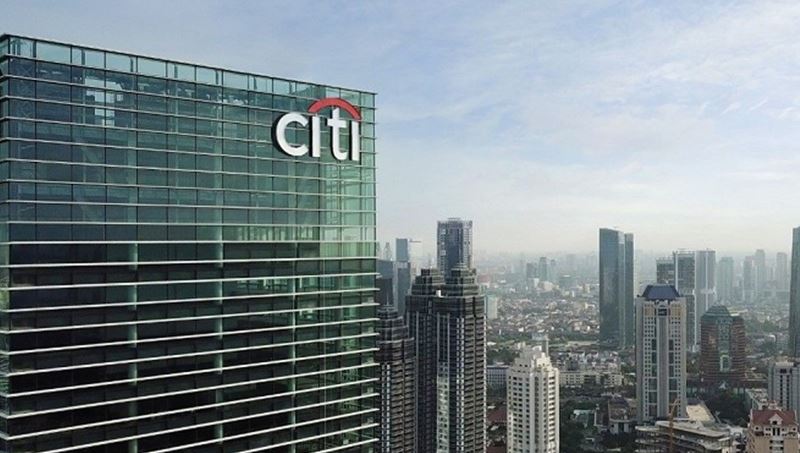
Jakarta – Citibank, N.A., Indonesia (Citi Indonesia) posted a net profit of IDR 2.59 trillion by the end of 2024, marking an increase of 3.38 percent from IDR 2.51 trillion in the previous year.
According to the bank’s published financial report on Wednesday, April 9, 2025, the profit growth occurred despite a sharp decline in interest income, which dropped 13.84 percent to IDR 5.35 trillion. Net interest income also fell by 17.90 percent to IDR 3.90 trillion. This was largely due to the decrease in interest income not being matched by a significant drop in interest expenses, which only declined slightly by 0.70 percent to IDR 1.46 trillion.
Nevertheless, Citi Indonesia’s profit rose on the back of substantial operational efficiency. Other operating expenses were slashed dramatically by 78.20 percent to IDR 536.07 billion from IDR 2.46 trillion in the previous year. This efficiency is reflected in the bank’s BOPO ratio (operating expenses to operating income), which improved significantly from 74.53 percent to 52.64 percent, far better than the industry average of 81.30 percent. Operational efficiency was the key driver of Citi Indonesia’s profit growth amid pressure on interest income.
Baca juga: Solid Intermediation Performance, IBK Bank Indonesia’s Profit Grows 17.76 Percent in 2024 to IDR 215.85 Billion
From an intermediation standpoint, Citi Indonesia experienced a significant decline in lending, with outstanding loans dropping 22.63 persen year-on-year to IDR 27.39 trillion from IDR 35.39 trillion. This decline caused the loan-to-deposit ratio (LDR) to plunge from 59.58 percent to 45.56 percent, well below the ideal range of 78 – 92 percent and far under the industry average of 88.57 percent. This indicates the bank has yet to optimize the utilization of its funds through loan disbursement, reflecting a less efficient use of available resources.
Meanwhile, third-party funds grew modestly by 1.88 percent to IDR 55.79 trillion, trailing the national banking industry’s DPK growth of 4.48 percent in 2024. The sharpest decline was seen in savings, which plummeted by 65.97 percent, followed by a 3.61 percent drop in demand deposits. However, time deposits surged by 29.77 percent, indicating a shift in customer preference toward term deposits offering higher returns.
Citi Indonesia’s total assets also posted positive growth of 2.43 percent to IDR 87.65 trillion, though still below the national banking industry’s average asset growth of 5.91 percent. Despite the modest growth, the bank maintained exceptional asset quality. Both gross and net non-performing loans (NPL) were recorded at 0.00 percent, far below the regulator’s 5 percent safety threshold and significantly outperforming most industry peers.
Baca juga: Bank Mizuho Indonesia Posts IDR 1.38 Trillion Profit in 2024, Grows 1.51 Percent
In terms of profitability, Citi Indonesia reported a return on assets (ROA) of 3.69 percent, up from 3.27 percent the previous year. Return on equity (ROE) slightly declined from 14.14 percent to 13.72 percent, but remained at a strong level. The net interest margin (NIM) stood at 4.90 percent, down from 5.32 percent last year, yet still higher than the industry average of 4.62 percent.
Citi Indonesia’s capital position remained robust, with its capital adequacy ratio (CAR) increasing from 37.85 percent to 40.51 percent, highlighting its strong capitalization and ability to support future growth while withstanding external risks. (*) Ari Nugroho