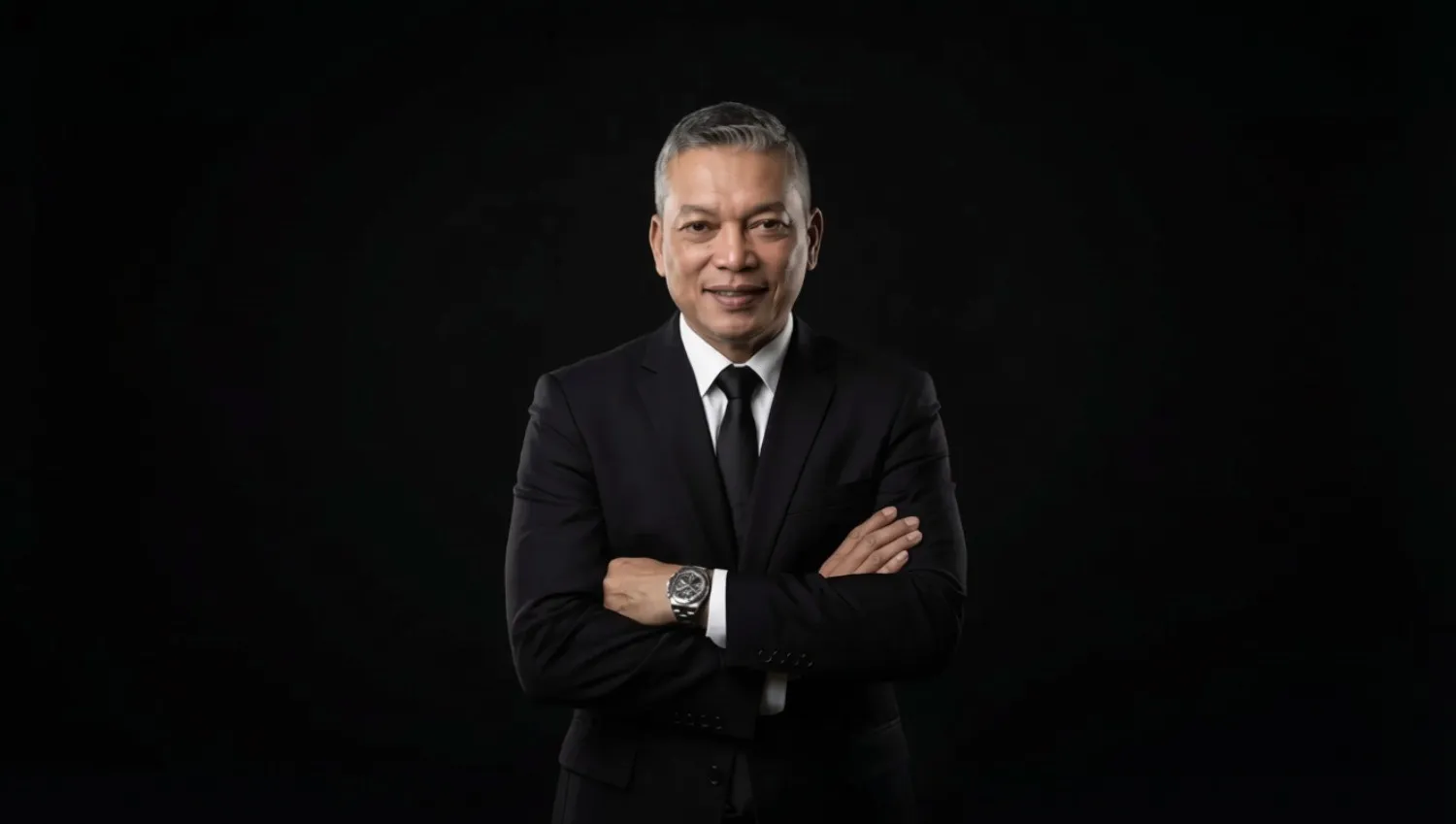
By Ryan Kiryanto, Banking Practitioner, Senior Economist, and Associate Faculty Member at the Indonesian Banking Development Institute (LPPI) Geographical Reference
The government, regulatory bodies and authorities, policymakers, self-regulatory organizations (SROs), and all participants in the Indonesian capital market must immediately take steps to improve the credibility of the stock exchange and public confidence.
Recently (July 8, 2026), S&P Dow Jones Indices (S&P DJI) included Indonesia on the list of countries potentially facing market reclassification in 2027. In fact, the global index provider warned that Indonesian stocks could be moved to the “special measures” or “frontier” classifications if issues regarding market transparency and liquidity remain unresolved.
To that end, S&P DJI continues to monitor developments regarding share ownership transparency in Indonesia, guided by new guidelines issued by the Indonesia Stock Exchange (IDX). This step was taken to address concerns about information transparency and its potential impact on market liquidity.
In short, if these issues remain unresolved within one calendar year of the “special measures” classification taking effect, Indonesia’s market classification will be reevaluated during the next annual review.
It should be noted that Indonesia has been placed on the S&P DJI watchlist alongside Turkey and Nigeria. Both of these countries are also at risk of being reclassified to the “special measures” or “frontier” categories. Turkey’s current market classification is “emerging,” while Nigeria’s is “standalone.”
Responsive Measures
Since the S&P DJI rating—and even after Morgan Stanley Capital International (MSCI) issued a “constructive warning” to domestic exchange authorities to implement several corrective measures—the government, regulators, self-regulatory organizations (SROs), and exchange participants have begun taking corrective actions as recommended by the rating agency. KeuanganBisnis
On June 18, 2026, MSCI—a U.S.-based global investment research firm that provides data, analysis, and stock market indices serving as key benchmarks for investment managers and institutional investors worldwide—expressed concerns and issued a warning to Indonesia’s capital market authorities, including the Indonesia Stock Exchange (IDX) and the Financial Services Authority (OJK), regarding market investability and transparency.
MSCI’s warnings pertained to the quality of market information, access for foreign investors, and the availability of disclosure in English.
Subsequently, as a follow-up to this evaluation, during its Annual Market Classification Review on June 23, 2026, MSCI decided to maintain Indonesia’s status as an emerging market but extended the evaluation period until November 2026. In the index review on July 7, 2026, MSCI also continued to freeze all increases in Indonesia’s equity weightings and has not yet included new stocks in its indices, namely the MSCI Investable Market Indexes (IMI).
Furthermore, the global index provider will not implement cross-index classification upgrades based on market capitalization segments, including moves from small-cap to standard-cap. MSCI will continue to delist stocks identified by Indonesian authorities as part of the High Shareholding Concentration (HSC) framework. MSCI will adopt 1 percent stock disclosure data to adjust free float estimates in its latest review.
Meanwhile, MSCI noted that further information regarding the review of the Indonesian market will be presented prior to the November 2026 index review. Previously, MSCI Inc. maintained the status of the Indonesian stock exchange in the emerging markets category. However, MSCI assessed that the quality of information and market transparency in Indonesia had deteriorated and needed to be improved.
Capital market authorities responded positively to these constructive criticisms and used them as momentum to continue, strengthen, and accelerate the capital market reform agenda that had been launched earlier this year. Consequently, the stock exchange authorities have since begun addressing the “weaknesses” highlighted in the critical assessments by both MSCI and S&P DJI. Investing
Some of the initiatives being promoted include improving the quality of share ownership data, enhancing information disclosure, developing a beneficial ownership reporting framework, strengthening trading oversight capabilities, and refining regulations to support investor protection.
In parallel with these efforts, the domestic stock exchange’s self-regulatory organization (SRO) has also continued to engage with international rating agencies to assure them that their concerns are being properly addressed through concrete corrective actions. The hope, of course, is that the future assessment of the Indonesian capital market will improve, making it the best choice for foreign investors.
Capital Market Participants’ Perceptions
In response to the reports from these global rating agencies, a number of stocks experienced sharp corrections. Even the Jakarta Composite Index (IHSG) on the Indonesia Stock Exchange (IDX)—which was expected to reach the 10,000 level this year—has been experiencing a persistent and quite extreme decline.
At the close of trading on Wednesday, July 8, 2026, the IHSG plummeted 107.41 points, or 1.89 percent, to close at 5,873.37. This decline occurred amid negative sentiment regarding the potential downgrade of Indonesia’s market status by S&P DJI and the depreciation of the rupiah, which broke through the Rp18,000 per U.S. dollar (USD) mark.
It is logical that most market analysts believe the IHSG’s potential for a re-rating or upside will remain limited through the end of this year. Index-based foreign investors have no strong reason to increase their exposure until the release of the MSCI review in November 2026.
Currently, the confidence levels of both local and foreign investors are waning. In light of this, significant attention and concrete action are needed from the government, regulators, self-regulatory organizations (SROs), and all exchange members to collectively “turn things around.” Thus, it is hoped that investor confidence (both local and foreign) can recover, and analysts will be inclined to issue positive assessments regarding the stock market’s future prospects. Brokerage & Daily Stock Trading
It must be understood that the shrinking value of stock exchange transactions indicates that market conviction remains low. This situation shows that the recent strengthening of the IHSG has not been supported by strong market participation. It is suspected that some funds have shifted to defensive instruments, such as money market funds, time deposits, short- to medium-term government bonds, and the U.S. dollar or gold. In the stock market, investors tend to favor large-cap stocks that are liquid, have a clearer free float, better corporate governance, strong balance sheets, and stable cash flow and dividends.
It is hoped that regulators can consistently implement reforms in the Indonesian stock market and produce tangible improvements. In the next one or two months, regulators could present concrete evidence of the “before and after” conditions following the implementation of new regulations, thereby creating positive sentiment for the domestic capital market.
A small number of market analysts believe that MSCI’s decision to maintain the freeze on Indonesia’s status does not necessarily mean the likelihood of a downgrade has increased. MSCI is expected to continue evaluating the effectiveness of capital market reforms implemented by regulators, including the use of High Shareholding Concentration (HSC) data, more detailed investor classifications, and the disclosure of shareholdings exceeding 1 percent.
Transparency in Communication
As we enter the second half of this year, the performance of the domestic stock market has indeed been less than encouraging. However, some market participants believe that the risk of Indonesia’s capital market being downgraded to a frontier market has diminished compared to before MSCI’s decision last June, even though those concerns have not entirely disappeared.
This is where regulators, policy-making bodies, and all stakeholders in Indonesia’s capital market must step up transparent communication efforts to rekindle public attention and confidence.
Updates on developments and responsive policies—whether already implemented, currently underway, or planned—must be communicated to the public to prevent the spread of invalid information (misinformation or disinformation). Releasing updates on the activities of the authorities, together with SROs and exchange members, is important to help investors make informed investment decisions. Brokers & Daily Stock Trading
The following communication efforts are good steps toward restoring, maintaining, and simultaneously enhancing public trust. First, on Monday (June 15, 2026), the Indonesia Stock Exchange (IDX), together with the Indonesia Business Coalition for Women Empowerment (IBCWE), launched the preliminary findings of the “Census on Women in Executive Leadership Teams (ELT) in IDX200 Companies (2022–2025)” at the IDX Main Hall in Jakarta.
The event, themed “From Disclosure to Impact: Advancing Women’s Leadership in IDX200 Companies,” was attended by more than 200 corporate leaders, regulators, and policymakers to discuss strengthening gender equality in corporate leadership as part of the environmental, social, and governance (ESG) agenda—standards for measuring a company’s sustainability and ethical impact in business and investment decision-making.
Second, on Wednesday (June 17, 2026), the IDX, together with the OJK, PT Kliring Penjaminan Efek Indonesia (KPEI), and PT Kustodian Sentral Efek Indonesia (KSEI), organized two strategic forums: “Discussion on Synergy in Maintaining the Stability and Resilience of the Indonesian Capital Market” and “Capital Market Insight: Regulations on Share Buybacks and Market Update” to discuss capital market reforms, market stability, and updates on share buyback policies.
At the forum, regulators and SROs reported on the progress of market transparency reforms, including an increase in the free-float threshold from 7.5 percent to 15 percent, disclosure of shareholdings exceeding 1 percent, and the HSC initiative to strengthen investor confidence.
Amid global uncertainty, the IDX emphasized the resilience of Indonesia’s capital market, as reflected by an average daily transaction value of Rp24.7 trillion, a total of over 28.3 million investors, and 80 percent of listed companies posting positive earnings in the first quarter of 2026.
Through this forum, the IDX also encouraged the use of share buyback policies as a strategy to strengthen long-term shareholder value. Indeed, a number of listed companies have already carried out share buybacks.
Third, on Thursday (June 18, 2026), the IDX hosted a forum titled “Strengthening Market Integrity: Towards a New Era of Ownership Transparency in the Capital Market,” organized by the Indonesian Anti-Corruption Coalition (KAKI), the Indonesian Institute for Corporate Directorship (IICD), and the Center for International Private Enterprise (CIPE) in the IDX Main Hall. Stocks & Bonds
The forum was part of efforts to strengthen integrity and transparency in order to support the creation of a more credible and competitive Indonesian capital market. The forum also emphasized the importance of ownership transparency in strengthening capital market integrity, increasing investor confidence, and promoting the implementation of good corporate governance.
Concluding Remarks
Transparent communication by the authorities in the Indonesian capital market is of utmost importance and critical as capital outflows continue through the end of the first half of this year. In January 2026 alone, initial pressure was felt as capital outflows reached USD1.6 billion. Then, in the first quarter (January–March), a total net outflow of foreign portfolio investments of USD800 million—or approximately Rp14.12 trillion cumulatively—was recorded.
In April 2026, an improvement began to take place with capital inflows of USD3.3 billion, supported by Bank Indonesia’s Rupiah Securities (SRBI)—short-term securities denominated in rupiah issued by BI as debt instruments.
These market-friendly instruments offered high yields (reaching a record high of over 7 percent) to attract foreign capital and stabilize the rupiah exchange rate. This trend continued in the second quarter (April–June), which saw massive net inflows of up to USD7.98 billion (approximately Rp143.34 trillion), even though the stock market still experienced outflows of around USD2.3 billion.
These net inflows indicate that the reform efforts undertaken by the authorities have been positively received by market participants. Economy
For the record, in early February 2026, the OJK, together with the government and relevant stakeholders—including SROs, the IDX, KPEI, and KSEI—reaffirmed its commitment to accelerating comprehensive reforms of the Indonesian capital market to strengthen liquidity, enhance transparency, and maintain investor confidence through eight action plans in line with best practices and to meet the expectations of global index providers.
First, raising the minimum free float requirement for issuers to 15 percent, up from the previous requirement of 7.5 percent. Second, strengthening transparency, particularly regarding the ultimate beneficial owner (UBO).
Third, enhancing share ownership data. Fourth, demutualizing the IDX, as mandated by law, to improve governance and reduce conflicts of interest.
Fifth, enforcement of regulations and sanctions. Sixth, strengthening issuer governance, including through mandatory continuing education for directors, commissioners, and audit committees, as well as mandatory certification for those preparing issuers’ financial statements.
Seventh, integrated market deepening through synergy between the OJK and the Ministry of Finance, the Bank of Indonesia, and other stakeholders, to strengthen the capital market’s role as a source of long-term financing. Eighth, strengthening collaboration and synergy with all stakeholders—including the government, self-regulatory organizations (SROs), and industry players—to continue capital market reforms in a sustainable manner.
Based on the data and information above, many believe that the Indonesian capital market still has the potential to maintain its status as an emerging market and continue to move upward, eventually achieving the status of a developed market. This category is reserved only for countries with highly stable economies, high per capita income, extremely high market liquidity, and highly mature financial infrastructure and regulations.
Ultimately, the greatest risk to Indonesia’s capital market today no longer lies in a lack of regulation, but rather in whether the implementation of these strategic regulatory reform agendas is truly carried out and capable of producing tangible changes in the market.